
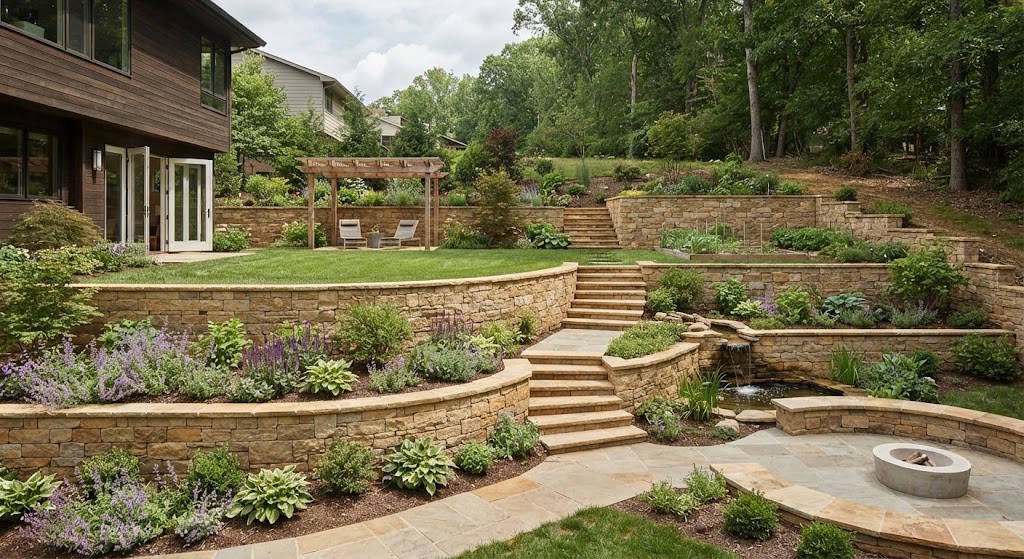
Sloping backyards can present unique challenges for homeowners, but with the right solutions, they can also become stunning outdoor spaces. One of the most effective ways to manage the landscape of a sloping yard is through the construction of retaining walls. These structures not only serve practical purposes but can also enhance the visual appeal of a garden. In this article, we will explore the various aspects of retaining walls, including their benefits, construction methods, and design options.
The Benefits of Retaining Walls
Understanding the advantages of retaining walls is the first step in appreciating their role in transforming a sloping backyard. These walls provide various benefits that enhance both functionality and aesthetics.
Structural Support and Soil Retention
One of the primary purposes of retaining walls is to provide structural support to sloped areas, preventing soil erosion and land sliding.
- Retaining walls hold back soil: allowing for the creation of level areas in a sloped yard.
- They prevent erosion by stabilizing the soil, especially during heavy rains.
- These walls can help maintain the integrity of nearby structures by diverting water runoff away from foundations.
Aesthetic Appeal and Design Versatility
Beyond their practical functions, retaining walls can significantly enhance the visual appeal of your outdoor space.
- Retaining walls come in various materials, including stone, brick, and concrete, allowing for customized designs.
- They can be integrated with landscaping features: such as gardens, pathways, and seating areas.
- By incorporating lighting or plants, retaining walls can create a beautiful focal point in your backyard.
Construction Methods for Retaining Walls
The construction of retaining walls involves several methods, each suited to different types of landscapes and materials. Understanding these techniques will help you choose the right approach for your backyard.
Gravity Walls
Gravity walls rely on their weight to hold back soil, making them a straightforward and effective option for many sloping yards.
- These walls are typically made from heavy materials: such as concrete or stone.
- The thickness and height of the wall are crucial for stability, as they must withstand the pressure of the soil behind them.
- Gravity walls are ideal for low to moderate slopes, providing a robust solution with minimal engineering requirements.
Reinforced Walls
For more complex projects or steeper slopes, reinforced retaining walls offer additional stability and support.
- These walls incorporate materials such as steel reinforcements or geogrid systems to enhance their structural integrity.
- They can be built taller and thinner than gravity walls, making them suitable for tighter spaces.
- Reinforced walls can handle greater soil pressures: and are often used in commercial applications or challenging terrain.
Design Options for Retaining Walls
When it comes to designing retaining walls, the choices are virtually limitless. Homeowners can customize their walls to fit their unique style and functional needs.
Material Selection
The choice of materials for retaining walls can dramatically alter the look and feel of your backyard.
- Natural stone offers a rustic and organic appearance, blending well with garden landscapes.
- Concrete blocks provide a modern aesthetic and can be painted or textured to fit various designs.
- Timber walls can create a warm and inviting atmosphere but require regular maintenance to prevent decay.
Incorporating Landscaping Features
Integrating landscaping features with retaining walls can enhance their functionality and beauty.
- Planting flowers or shrubs atop the wall can soften its appearance and add color.
- Creating terraces or steps: can transform the wall into a multi-level garden space.
- Incorporating seating areas or fire pits can turn the wall into a social space for gatherings.
Retaining walls can significantly transform a sloping backyard, providing both functional support and aesthetic appeal. With various construction methods and design options available, homeowners can tailor their retaining walls to suit their specific needs and preferences. If you are considering a retaining wall project, it is advisable to consult with a qualified professional to ensure the best results for your landscape. A well-designed retaining wall can enhance your outdoor space, making it both beautiful and functional for years to come.