
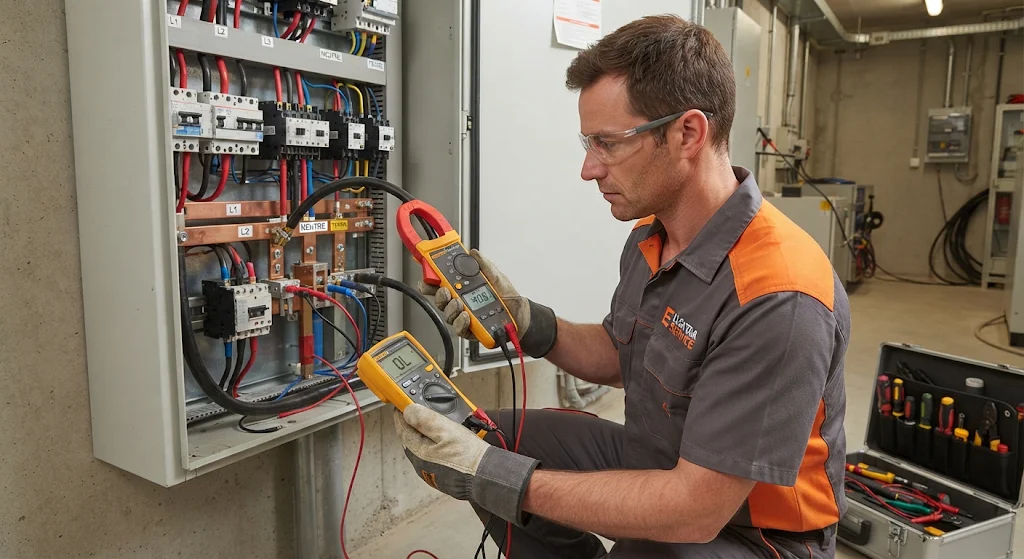
Urgent electrical faults rarely announce themselves clearly: a breaker may trip repeatedly, an outlet may feel warm, or equipment may stop working without an obvious cause. Finding the source safely depends on matching the right testing device to the symptom, understanding what its readings can—and cannot—show, and knowing when to stop and call a licensed electrician. From a multimeter to a thermal imaging camera, modern diagnostic tools help narrow the search without relying on guesswork.
Diagnostic Devices for Urgent Electrical Problems
Testing devices used to locate urgent electrical problems do not all measure the same thing. Some detect voltage, others identify a circuit or assess insulation, so choosing a tool starts with the symptom and the level of access required.
A non-contact voltage detector can indicate whether an energized conductor may be present without touching bare metal. It is useful for an initial screening, but it cannot confirm that a circuit is de-energized: its sensitivity, position, and nearby wiring can affect the result. A properly rated voltage tester provides a more direct check when used according to its instructions.
A multimeter measures properties such as voltage, resistance, and continuity, while a clamp meter measures current around a conductor without disconnecting it. These readings can help distinguish a supply issue from an overloaded circuit, but the selected function, probe connections, and instrument rating must match the task. Never use a meter on a live circuit unless trained and equipped to do so.
Voltage Tools for Initial Checks
Outlet testers quickly flag certain common wiring conditions, such as an open ground or reversed polarity, through indicator patterns. They are screening tools, not comprehensive diagnostics: they may not detect every wiring defect or establish that an outlet is safe under load.
When breakers are poorly labeled, a circuit breaker finder can help associate an outlet or fixture with its corresponding breaker. A circuit tracer can follow a wire path or help locate interruptions, depending on its design. Both reduce unnecessary switching, but they cannot replace isolation procedures before electrical work begins.
Thermal Tools for Hidden Heat
A thermal imaging camera displays temperature differences that may point to an overloaded connection, failing component, or uneven heating. It does not see through walls or identify a fault by itself; environmental conditions and surface materials can affect the image, so findings need confirmation with appropriate tests.
For insulation concerns, an insulation resistance tester applies a controlled test voltage and measures resistance across insulation. Because this test can affect connected electronics and requires specific isolation procedures, it is generally best left to qualified professionals. A dedicated electrical fault locator may also help trace certain faults in cables or circuits, depending on the system and the fault type.
Selection Methods for Electrical Fault Detection
The most useful device is the one suited to the question being asked. A warm panel, a dead receptacle, and repeated breaker trips point toward different checks; combining tools in a deliberate sequence can narrow the possibilities while avoiding unnecessary exposure.
The following overview compares common instruments by their primary purpose. It is a guide to capabilities, not a substitute for the manufacturer’s instructions or professional assessment.
| Device | Typical use | Important limitation |
|---|---|---|
| Voltage tester | Checking for voltage at accessible points | Requires correct rating and procedure |
| Multimeter | Measuring voltage, resistance, or continuity | Incorrect settings can create hazards or false readings |
| Clamp meter | Measuring current around a conductor | Conductor placement and meter range matter |
| Outlet tester | Screening receptacle wiring conditions | Does not identify every defect |
| Thermal imaging camera | Finding abnormal heat patterns | Thermal patterns require interpretation and confirmation |
For commercial settings, even a brief interruption can affect equipment, safety procedures, and daily operations. Understanding electrical issues that disrupt commercial operations helps clarify why prompt diagnosis and safe escalation matter.
Selection Criteria for Testing Devices
Before testing, identify the symptom, determine whether the circuit can be safely isolated, and check that the instrument is appropriate for the expected voltage and environment. A useful selection checklist includes:
- Match the device’s measurement function to the suspected fault.
- Check the instrument’s rating, condition, and operating instructions.
- Use protective equipment and follow safe isolation procedures.
- Confirm unusual readings with a suitable method rather than relying on one indicator.
These steps help prevent a common diagnostic error: treating a preliminary signal as proof of the fault’s cause. A tripped breaker, for example, may reflect overload, a short circuit, or another defect; repeated resetting without investigation can increase risk.
Safety Procedures During Urgent Testing
Electrical diagnostics can expose users to lethal voltage, arc flash, and unexpected re-energization. If there is smoke, sparking, a burning odor, visible damage, or a hot electrical panel, keep clear, avoid touching the equipment, and contact emergency services or a licensed electrician as appropriate.
Never remove covers or probe exposed conductors unless qualified to perform that work. Tools must be inspected before use, and testing should follow established procedures for isolating, verifying, and controlling circuits. A non-contact detector alone cannot prove a circuit is safe to handle.
For businesses, documented inspections and a clear response plan can reduce disruption when faults arise. Further guidance on managing electrical disruptions in commercial spaces can complement a site-specific safety program.
Testing devices can narrow the search, but accurate diagnosis depends on sound procedures, correct interpretation, and the right expertise. For personalized advice or specialized intervention, consult a licensed electrical professional rather than attempting work beyond your training.


