
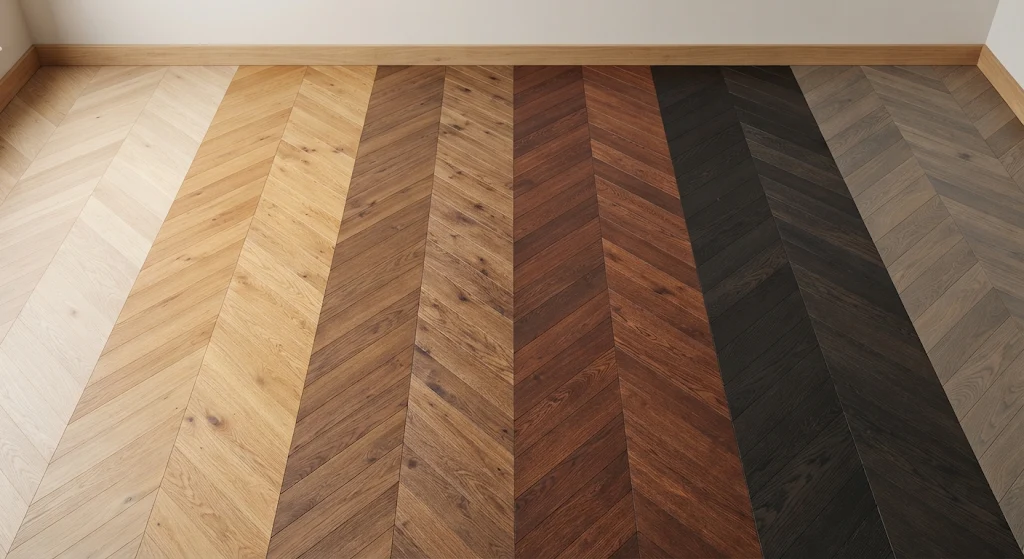
Wood stain does more than add colour: it changes how flooring reflects light, how large a room feels and how furniture sits within the overall design. From pale Natural oak to deep Espresso brown, the right shade can highlight the grain, soften a busy interior or give a familiar space a distinctly different character. Choosing well means looking beyond a colour sample.
Colour Families That Change Wood Flooring
Each stain family creates a different visual mood, but the natural grain remains part of the effect. During wood floor refinishing, lighter colours tend to keep rooms feeling open, while darker shades bring greater contrast and visual weight.
-
Natural oak and Golden maple preserve a bright, warm appearance and suit interiors with pale walls or natural materials.
-
Honey amber adds golden warmth, while Walnut stain gives the floor a richer brown tone without necessarily obscuring its grain.
-
Weathered gray and Whitewash create a muted look that pairs readily with contemporary or coastal palettes.
-
Espresso brown, Charcoal black and Red mahogany make a stronger statement through depth, contrast or reddish warmth.
These colours are starting points, not guaranteed results: the same stain can look different on oak, maple or pine. For another dark-wood reference, wenge flooring trends show how a deep tone can shape an interior’s character.
Factors That Influence the Final Stain Colour
Wood species, age and preparation all affect the final appearance. Oak has a pronounced grain, whereas maple has a tighter texture and may absorb colour less uniformly. Pine can show knots and variations that become more noticeable after staining.
Existing finishes matter too. Previously stained floors may need even sanding before a new shade is applied. Otherwise, scratches, old coatings and patches can affect the result. An expert can assess the wood and recommend suitable preparation before work begins.
Matching Stain to the Room
A stain should complement the room’s natural light, walls and furnishings. In a small or dim space, a pale or medium shade can maintain an airy impression. Dark flooring can also work in compact rooms, but creates stronger contrast and may show dust or light debris more readily.
Consider undertones as well as depth. Golden or reddish finishes add warmth, while gray or neutral brown shades create a quieter backdrop. Furniture does not need to match the floor exactly; differences in tone can help each element stand out. Aim for balance between flooring, cabinetry, textiles and decorative details.
Test Samples Before Committing
A sample should be viewed in the actual room at different times of day. Daylight, warm bulbs and cool artificial lighting can change how a stain appears. Testing options side by side makes subtle differences easier to spot.
Before deciding, consider these checks:
-
Apply samples to an inconspicuous area of the floor, if possible.
-
View the colour in morning, afternoon and evening light.
-
Compare it with existing furniture, trim and wall paint.
-
Let the sample dry fully, since wet stain may look darker.
-
Confirm whether the finish will be matte, satin or glossy, as sheen affects reflection.
Protecting the Look Over Time
The protective finish applied over the stain also affects its appearance. A suitable sealant helps guard against wear, spills and marks, while sheen determines how much light the floor reflects. High-gloss finishes can emphasize scratches, whereas matte options create a softer look.
Regular care preserves the result. Use products recommended for the finish, wipe up spills promptly and add protective pads beneath furniture legs. Rugs in busy walkways can reduce abrasion, provided they are suitable for wood and do not trap moisture.
Choosing a Shade That Fits the Space
The best wood stain is not necessarily the darkest, lightest or most fashionable option. It is the shade that suits the wood, room lighting and desired atmosphere. By comparing samples, checking undertones and planning for maintenance, homeowners can choose a finish that highlights the floor’s character and remains pleasing over time.


