
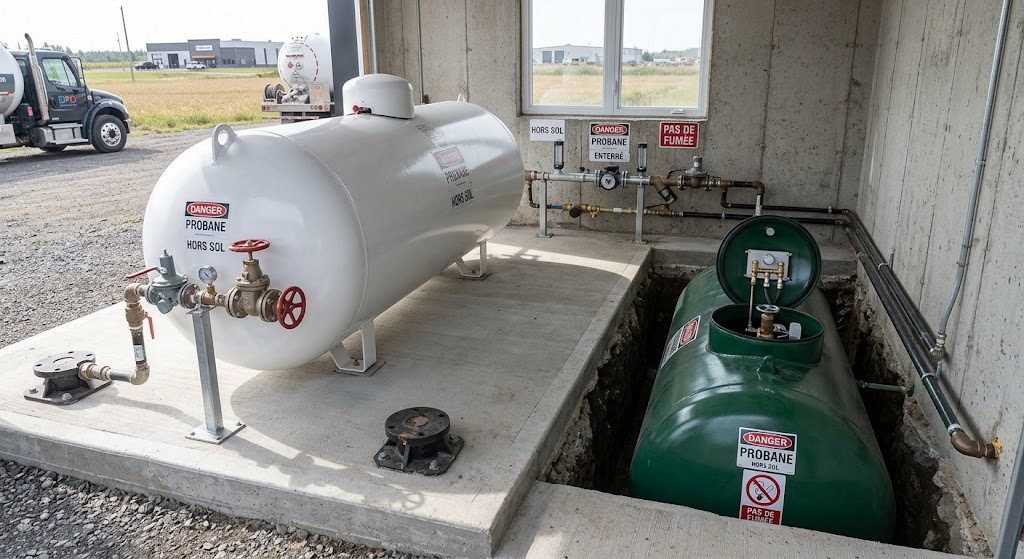
Choosing between an aboveground propane tank and an underground propane tank affects more than the look of a property. The decision shapes installation costs, access for servicing, corrosion protection, and how the system fits the site over time. Both options can support reliable residential propane storage, but the right tank placement depends on ground conditions, local safety regulations, and maintenance preferences.
Installation Differences for Aboveground and Underground Propane Tanks
An aboveground tank usually rests on a suitable concrete pad or blocks, making site preparation relatively straightforward. Technicians can reach the tank’s shell and fittings directly, which simplifies inspection, filling, and many repairs; relocation or replacement is generally easier too.
An underground installation requires excavation, appropriate bedding and backfill, and a tank specifically designed and marked for burial. Only a small protective dome remains visible, while the valves and connections stay accessible beneath its cover. A standard tank cannot simply be buried: underground models require a suitable coating and provisions for cathodic protection.
Site Preparation and Setbacks
Soil conditions, buried utilities, septic systems, access for delivery trucks, and the planned location of driveways or additions all influence propane tank installation. A high water table can require anchoring a buried tank to reduce the risk of movement, while rocky ground may make excavation difficult.
Required clearances vary with tank capacity, the applicable edition of NFPA 58, and local rules. As a general reference, certain aboveground tanks in the 501-to-2,000-gallon range require more distance from buildings than comparable underground tanks. A licensed installer and local authority should confirm the permitted location before work begins.
Advantages and Trade-Offs of Each Tank Placement
Visibility is often the first difference property owners notice, but weather exposure, access, and future upkeep also matter. Comparing these factors together gives a more useful picture than choosing on appearance alone.
| Factor | Aboveground Tank | Underground Tank |
|---|---|---|
| Appearance | Tank remains visible and uses yard space | Only the access dome is usually visible |
| Installation | Typically simpler, without excavation | Requires excavation and burial preparation |
| Inspection | Shell and fittings are easy to view | Buried shell cannot be visually checked |
| Corrosion protection | Paint and surface care help protect the shell | Burial coating and cathodic protection are required |
| Cold-weather performance | More exposed to changing air temperatures | Soil temperatures are generally steadier |
Aboveground Access and Exposure
Direct access makes routine propane tank maintenance and visible damage checks more straightforward. Rust, dents, or damaged fittings can be noticed without excavation, and the tank can often be lifted away if property plans change. The trade-off is a visible structure exposed to weather, which may affect landscaping and require attention to its exterior condition.
Underground Appearance and Upkeep
Burying the tank preserves open lawn space and reduces visual impact. The surrounding soil also moderates temperature fluctuations, helping maintain a steadier rate of propane vaporization during cold weather. However, hidden steel can corrode without visible warning, so cathodic protection must be tested and records retained according to applicable requirements.
For many underground tanks installed under current code requirements, testing is performed at burial, again after an initial interval, and then periodically if results remain acceptable. The exact schedule depends on local regulations; owners should confirm it with their supplier or regulator. This responsibility should be considered when deciding who will own and service the equipment.
Selection Factors for Residential Propane Storage
Installation costs are shaped by more than the tank itself. Excavation, soil conditions, permits, gas-line distance, and restoration work can increase the total for a buried system, while aboveground installation generally involves less site disruption. The following checks help narrow the choice:
- Review the property: Identify utilities, septic systems, water conditions, slopes, and available delivery access.
- Confirm clearances: Have a licensed professional verify setbacks and other safety regulations for the tank size and location.
- Plan for future changes: Keep tanks away from proposed driveways, buildings, pools, and areas where vehicles may pass.
- Decide who handles upkeep: Clarify ownership, inspection duties, cathodic protection testing, and recordkeeping before installation.
The tank’s location does not determine how much propane a home needs; sizing should be based on appliances, demand, and climate. An installer can evaluate those needs alongside site constraints, then explain whether the simpler access of an aboveground model or the discreet profile of a buried one better fits the property.
Professional Planning for a Reliable Installation
Neither option is a do-it-yourself project. Tank setting, regulators, piping, leak testing, and initial service require qualified professionals working to the relevant code and local requirements. Proper planning also helps prevent conflicts with buried infrastructure and ensures delivery access remains practical.
Ultimately, an aboveground tank favors accessibility and simpler installation, while an underground tank prioritizes a clear landscape at the cost of excavation and additional corrosion-related upkeep. A licensed propane professional can assess the site and provide guidance tailored to its conditions and intended use.