
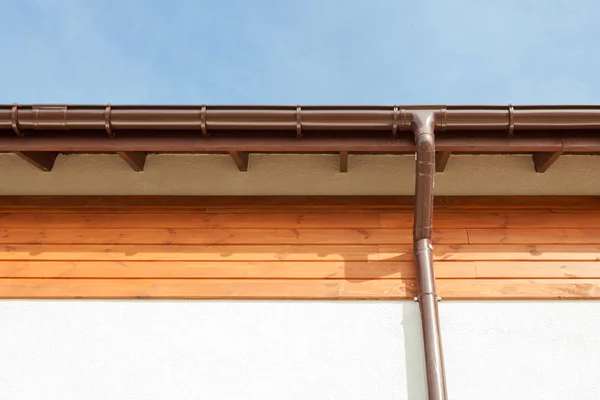
Gutters rarely fail all at once. A small leak, a loose bracket, or a patch of leaves can gradually turn a rain shower into water running down siding, soaking soil beside the foundation, or seeping toward the basement. Because these changes often happen out of sight, homeowners may not connect peeling paint or a damp crawl space with a drainage system overhead.
Spot the signs your gutters are failing
Some warning signs appear only during rainfall, while others remain visible on dry days. Check from the ground, and observe the roofline after a storm rather than climbing a ladder or reaching over the edge.
Watch for overflow, leaks, and clogs
Gutter overflow during rain may point to clogged gutters, a blocked downspout, a poorly sloped run, or a section that has buckled. If water spills over the same spot repeatedly, it can stain siding, wash away mulch, and cause landscape washout near the house.
Drips from seams, cracks, holes, or end caps are another clear warning. Even a small leak can direct water onto fascia boards and trim; recurring moisture may weaken the wood and eventually contribute to roof leaks.
Notice sagging sections and loose hardware
Sagging gutters, uneven edges, or visible gaps between the gutter and fascia suggest that hangers have loosened, debris has added weight, or the supporting wood has deteriorated. Screws or spikes on the ground are a related clue: as fasteners fail, the remaining attachments bear more strain, and a loose section can pull farther away.
Water may then run behind the gutter instead of toward the downspout. That hidden path can damage fascia, soffits, and siding, so a sagging section deserves attention even if it still catches some rain.
Trace the damage around your home
A gutter problem often leaves evidence below the roofline. Look for patterns after rain: a single wet patch may be temporary, but repeated staining or puddling in the same place suggests water is not being carried away effectively.
Check the foundation, basement, and landscaping
Persistent puddles, soft soil, or displaced mulch close to the house can indicate that downspouts discharge too near the foundation or that runoff is escaping higher up. Over time, this can cause foundation erosion; in homes with basements or crawl spaces, excess moisture may also raise the risk of basement flooding or damp conditions indoors.
Clay-heavy soil can hold water rather than drain it quickly, making repeated pooling especially concerning. Note where the water collects and whether a downspout is blocked, disconnected, or releasing runoff beside the wall. These observations help a professional identify whether the issue lies in the gutter, the outlet, or the surrounding drainage.
Look for peeling paint and wood deterioration
Peeling paint, dark streaks, mildew, or soft fascia boards can signal prolonged exposure to leaking or overflowing water. These marks may appear gradually, so compare suspect areas with nearby surfaces and look for changes after storms.
Plants growing in the gutter, rust, and recurring seam leaks also deserve attention. Vegetation usually means debris has remained long enough to trap moisture and restrict flow; the extra weight can worsen sagging and wear. The outside of the home can reveal what is happening overhead.
| What you notice | Possible cause | Why it matters |
|---|---|---|
| Water spilling over the edge | Clog, poor slope, or undersized section | May stain siding and erode soil |
| Drips at joints or corners | Worn sealant or damaged seam | Can soak fascia and trim |
| Sagging or loose sections | Failed fasteners, excess weight, or rotted fascia | May allow water behind the gutter |
| Puddles by the foundation | Blocked outlet or poor discharge location | Can increase moisture and erosion risks |
Choose between gutter repair and replacement
Not every warning sign calls for a new system. A localized clog, loose bracket, or isolated seam leak may be repairable, provided the surrounding gutter and fascia remain sound. The decision should account for how widespread the damage is and whether problems return after maintenance.
Repair isolated damage before it spreads
A professional may be able to clear a blockage, secure a short loose section, correct the slope, or seal a limited leak. If water is pooling, also check that the downspout carries it away from the home; repairing the gutter alone will not solve poor drainage at ground level.
Keep a brief record of recurring trouble spots and take photographs from a safe position after rainfall. That simple history can help distinguish a one-time obstruction from a persistent failure.
Consider gutter replacement when failures repeat
Gutter replacement may make more sense when rust, cracks, leaks, or failing fasteners appear in several places, or when sections repeatedly sag despite repairs. Extensive fascia rot also needs to be addressed before gutters can be securely attached. Older systems with recurring problems may continue to fail one patched area at a time.
Ask a qualified gutter professional to inspect the system, including its slope, joints, downspouts, and supporting wood. A tailored assessment can clarify whether a targeted repair will restore reliable drainage or whether a replacement is the more durable solution.
Before the next heavy rain, check for overflow, loose sections, surface stains, and standing water around the house. Acting on the first signs can limit damage; a professional can recommend the right repair or replacement plan for your home.