
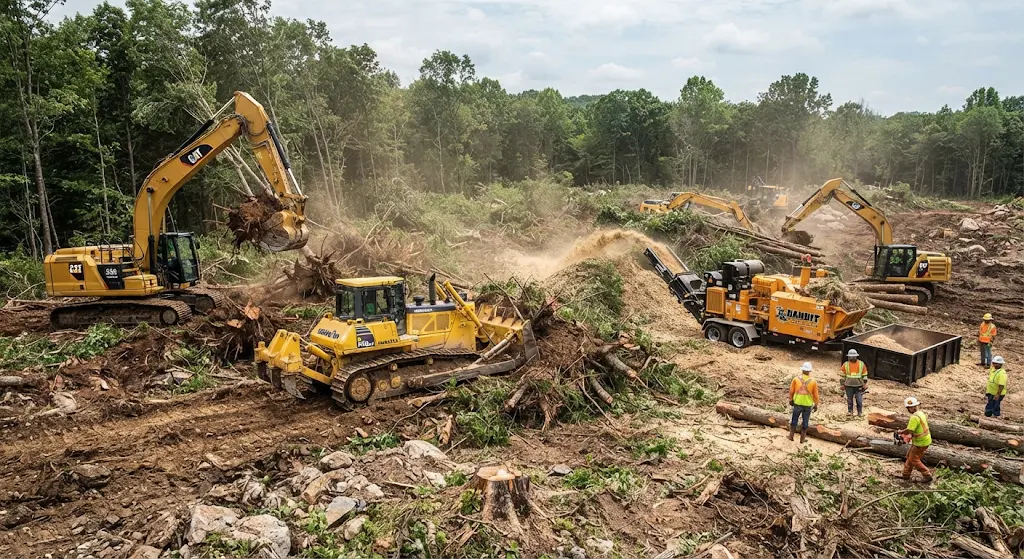
Land clearing is a vital process in various construction and landscaping projects. It involves the removal of trees, shrubs, and other obstacles to prepare a site for development. In this article, we will explore the three primary machines used in land clearing: excavators, bulldozers, and mulchers. Each of these machines plays a unique role, and understanding their functions can significantly enhance project efficiency.
Excavators: Versatile Heavy Machinery
Excavators are known for their versatility and efficiency in land clearing tasks. They come in various sizes and configurations, making them suitable for different types of projects.
Types of Excavators
Excavators can be classified into several categories based on their design and functionality. Here are some common types:
- Crawler Excavators: These machines have tracks instead of wheels, providing stability and traction on uneven terrain.
- Wheeled Excavators: Ideal for urban settings, these machines can travel quickly on roads while still providing excellent digging capabilities.
- Mini Excavators: Perfect for tight spaces, mini excavators are compact yet powerful, making them ideal for residential projects.
Applications in Land Clearing
Excavators are equipped with various attachments that enhance their functionality in land clearing. These applications include:
- Digging Foundations: Excavators can remove soil and debris to create foundations for buildings.
- Removing Stumps: With the right attachment, excavators can efficiently uproot tree stumps, facilitating a cleaner site.
- Grading Land: They can level the ground, ensuring proper drainage and preparing the area for construction.
Bullzozers: Powerhouses of Land Clearing
Bullzozers are among the most powerful machines used in land clearing. They are designed to push large volumes of material and are essential for heavy-duty tasks.
Features of Bulldozers
The design of bulldozers allows them to perform exceptionally well in land clearing operations. Key features include:
- Wide Blades: The broad blades can move substantial amounts of soil and debris in a single pass.
- Tracked Design: This feature provides increased stability and traction on uneven and steep terrains.
- Adjustable Blade Angles: Operators can adjust the blade angle for various tasks, such as spreading material or pushing debris.
Role in Land Clearing Projects
Bulldozers play a vital role in several aspects of land clearing:
- Clearing Vegetation: They can push over trees and shrubs, clearing large areas quickly.
- Moving Soil: Bulldozers are effective for moving soil to create level surfaces or fill in depressions.
- Creating Roads: They can clear paths for access roads, making it easier for other machinery to operate.
Mulchers: Eco-Friendly Land Clearing Solutions
Mulchers are specialized machines used for grinding vegetation and converting it into mulch. This process not only clears land but also contributes to environmental sustainability.
How Mulchers Work
Mulchers utilize rotating blades to chop vegetation into small pieces. Here’s how they operate:
- Grinding: The blades grind trees and shrubs into mulch, which can then be used on-site.
- Reducing Waste: Mulching reduces the volume of waste, making disposal easier and more efficient.
- Soil Enrichment: The mulch can help enrich the soil by decomposing and returning nutrients back to the ground.
Benefits of Using Mulchers
Incorporating mulchers into land clearing projects offers several advantages:
- Environmental Impact: Mulching minimizes waste and promotes sustainability by using organic materials.
- Improved Aesthetics: The mulch can enhance the visual appeal of cleared areas, providing a natural look.
- Erosion Control: Mulch helps retain soil moisture and prevents erosion, promoting healthier landscapes.
Conclusion
The combination of excavators, bulldozers, and mulchers creates a powerful toolkit for land clearing projects. Each machine brings its own strengths to the table, ensuring that tasks are completed efficiently and effectively. For optimal results in your land clearing endeavors, consider consulting with a professional who can guide you in choosing the right equipment and techniques for your specific needs.