
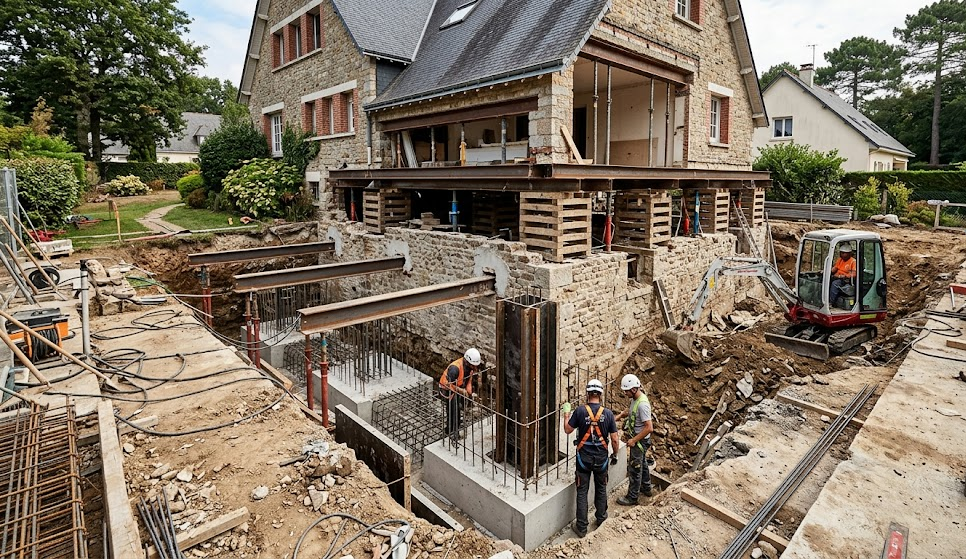
Underpinning plays a vital role in the structural integrity of buildings, particularly in situations where their foundations face unexpected challenges. As structures age or when adjacent construction activities disturb soil stability, choosing the right underpinning method becomes essential. This article explores various underpinning techniques and their practical applications, ensuring building longevity and safety.
Understanding Underpinning: A Foundation Strengthening Technique
Underpinning serves as a specialized construction approach aimed at reinforcing and stabilizing existing foundations. When geological conditions, increased loads, or structural damage compromise the performance of a foundation, underpinning techniques extend the depth or broaden the bearing area. This process ensures long-term structural support and prevents settlement failures.
Defining the Need for Underpinning in Construction
Recognizing when underpinning is necessary is crucial in construction and foundation work. Many factors can necessitate this intervention, including:
- Declining foundation performance due to soil movement or deterioration.
- Expansion of structural loads beyond the original design capacity.
- External conditions, like nearby excavations, that may destabilize current foundations.
Identifying these issues early can prevent catastrophic structural failures and reduce costly repairs down the line.
Exploring Different Underpinning Methods
Various underpinning methods cater to different structural needs, soil conditions, and project scopes. The selection of an appropriate technique is critical for ensuring the effective transfer of loads and enhancing stability. Below are some of the most widely used underpinning methods:
Mass Concrete Underpinning
This traditional method, often referred to as the “pit method,” entails excavating soil beneath the foundation in stages before backfilling with concrete. It is especially effective for shallow foundations and stable soil conditions. Additionally, this approach is low-cost and straightforward, making it a popular choice for many construction projects.
Beam and Base Underpinning
In this technique, reinforced concrete beams are constructed to support the building load while transferring it to concrete bases founded on more stable soil. This method is ideal for irregularly loaded structures, providing better load distribution compared to traditional methods.
Mini-Pile Underpinning
Mini-pile underpinning utilizes small-diameter piles that are drilled into deeper strata. This technique is ideal for sites with restricted access and unstable soil conditions. As a result, mini-piles can effectively transfer loads even in challenging environments, such as waterlogged or clayey soils.
Piering and Helical Piles
Piering involves installing piles adjacent to the foundation, which help support the structure by transferring loads directly to the underlying stable ground. Helical piles are also an excellent option as they can be installed quickly in various soil conditions and offer minimal vibration during application.
Jet Grouting Underpinning
This innovative technique strengthens the existing soil through high-pressure injection of grout, creating solid columns of improved soil density. It is particularly effective in loose or sandy soil conditions, offering a flexible solution in compact or urban environments.
Cantilever Needle Beam Underpinning
Used when external excavation is impossible, this method relies on reinforced concrete needles inserted through walls that are then anchored to deep concrete bases. This technique is efficient in densely constructed areas where conventional methods are impractical.
The Practical Applications of Underpinning
Underpinning is not limited to residential buildings; its applications span a broad range of structural contexts. Below are some essential areas where underpinning is typically utilized:
- Residential Buildings: Repairing and upgrading foundations for homes facing settlement issues.
- Commercial Structures: Stabilizing commercial buildings that endure significant loads or environmental changes.
- Historical Sites: Safeguarding heritage structures that require special attention due to their historical significance.
Choosing the right method of underpinning not only restores foundation integrity but also improves resilience against future structural challenges, ensuring these diverse structures remain safe and functional.
Engineering Considerations in Underpinning
Several critical factors play a role in the effectiveness of underpinning methods. Key considerations include:
- Soil type and bearing capacity that influence load transfer.
- Groundwater levels affecting excavation and support stability.
- Proximity to existing structures and potential impact on their foundation integrity.
Understanding these elements ensures that underpinning methods are effectively tailored to meet the specific needs of each project.
Comparing Underpinning Techniques with Foundation Repair
While underpinning focuses on deepening or expanding existing foundations, foundation repair generally targets surface-level issues such as fissures or leaks. It is crucial to differentiate these approaches, as each serves distinct purposes and requires different levels of engineering design and intervention. The proper understanding of these terms aids property owners in making informed decisions regarding their structures.


