
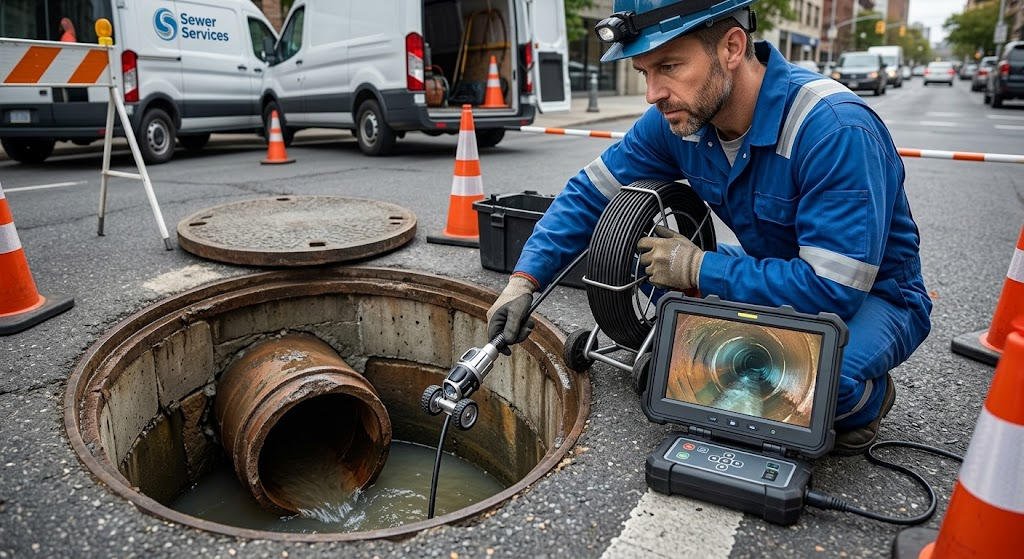
When a sewer line backs up, symptoms alone rarely reveal whether the cause is a blockage, root intrusion, damaged joint, or sagging section of pipe. Traditional sewer diagnostics can narrow down the possibilities, but a sewer camera inspection adds a direct view of the pipe interior, helping technicians replace guesswork with observable evidence. Understanding the strengths and limitations of both methods makes it easier to choose an appropriate pipe condition assessment.
Sewer Camera Inspection and Traditional Diagnostic Methods
Traditional plumbing diagnostics may rely on symptoms, experience, drain clearing, dye tests, listening equipment, or pressure measurements. These techniques can be useful, particularly for straightforward checks, but they do not always show the location or nature of a defect inside an existing line.
With drain camera technology, a technician guides a waterproof camera through an accessible pipe and views the footage in real time. This non-invasive inspection can reveal cracks, roots, grease, scale, displaced joints, and other obstructions that surface clues alone may not distinguish.
Sewer Camera Findings and Diagnostic Accuracy
Direct images improve diagnostic accuracy by showing where a problem lies and what it looks like. A camera’s locating equipment can also help mark a defect’s position, allowing repair work to focus on the affected section instead of relying on broad exploratory digging.
Recorded footage and still images can support clear reports, maintenance records, and discussions about proposed work. When a blockage is confirmed, technicians can determine whether cleaning is appropriate; methods such as hydro jetting for drain cleaning may suit certain buildup, but inspection helps assess the pipe before selecting a treatment.
Sewer Line Diagnostics Compared by Method
The best diagnostic method depends on the question being asked, the pipe’s accessibility, and the suspected fault. The comparison below highlights typical differences rather than guaranteeing a particular result for every property.
| Method | Best Suited To | Key Limitation |
|---|---|---|
| Camera inspection | Visualizing internal defects and locating obstructions | Access or severe damage may restrict camera movement |
| Dye testing | Tracing certain water pathways or suspected cross-connections | Does not provide a detailed view of pipe condition |
| Acoustic testing | Investigating some leaks through sound patterns | Results can depend on surrounding noise and conditions |
| Pressure testing | Checking whether a system holds pressure | Does not identify every defect’s exact appearance or location |
Traditional Tests and Their Continuing Value
Not every inspection requires a camera. Visual checks of an exposed pipe can be sufficient during installation, while pressure or acoustic testing may answer focused questions that video cannot. Traditional methods therefore remain useful when matched to the specific diagnostic objective.
For existing sewer networks, however, these tests may need to be paired with visual inspection to establish the defect’s precise nature. A combined approach can be especially helpful when debris or pipe deformation limits camera travel.
Sewer Inspection Choices, Limitations, and Next Steps
A camera inspection can reduce unnecessary excavation, document conditions, and support preventive maintenance by identifying deterioration before symptoms become severe. It cannot overcome every access problem: heavy obstructions, collapsed sections, or tight bends may prevent a complete view, making targeted excavation or another test necessary.
Technicians also need practice to guide equipment safely, interpret footage, and use locating tools correctly. If a confirmed blockage calls for cleaning, a professional can assess whether a water-jet cleaning approach is suitable for the pipe’s material and condition.
- Consider a camera inspection for recurring backups, persistent slow drainage, or suspected root intrusion.
- Use pressure, acoustic, or dye testing when the suspected issue calls for a focused test.
- Request recorded findings and a clear explanation before authorizing sewer line repair.
Matching the method to the problem leads to a more useful assessment than relying on symptoms alone. A qualified plumbing professional can recommend the right combination of tests and interpret the findings for the specific sewer system.


