When contemplating garden design, one often overlooks the potent capabilities of retaining walls. While primarily known for their structural integrity, these walls can create dynamic and functional outdoor spaces. In this article, we’ll delve into how retaining walls can enrich your garden design experience and elevate the beauty of your property.
Understanding Retaining Walls
Retaining walls are structures built to hold back soil and prevent erosion, especially in sloped areas. They serve various purposes, from managing water drainage to enhancing the aesthetic appeal of a landscape. By grasping their functionality, homeowners can better appreciate their benefits in garden design.
Preventing Soil Erosion
One of the standout benefits of incorporating a retaining wall is its ability to mitigate soil erosion. In areas prone to heavy rainfall, soil can easily wash away, compromising the integrity of your garden. By strategically placing a retaining wall, you can act as a guardian, holding back the soil and preserving the beauty of your landscape.
These walls enhance the control of water runoff, directing it away from your home and plants. This is particularly advantageous for gardens situated on hillsides. By channeling excess water effectively, retaining walls help maintain soil quality, thus nurturing your plants’ health. Moreover, the stability they provide helps prevent water-related issues, ensuring that your garden flourishes.
Creating Usable Spaces
Another remarkable feature of retaining walls is their ability to transform a yard’s layout. Sloped or uneven terrain can be challenging for practical gardening. However, when a retaining wall is employed, it creates flat areas that can be converted into flourishing gardens, patios, or seating areas.
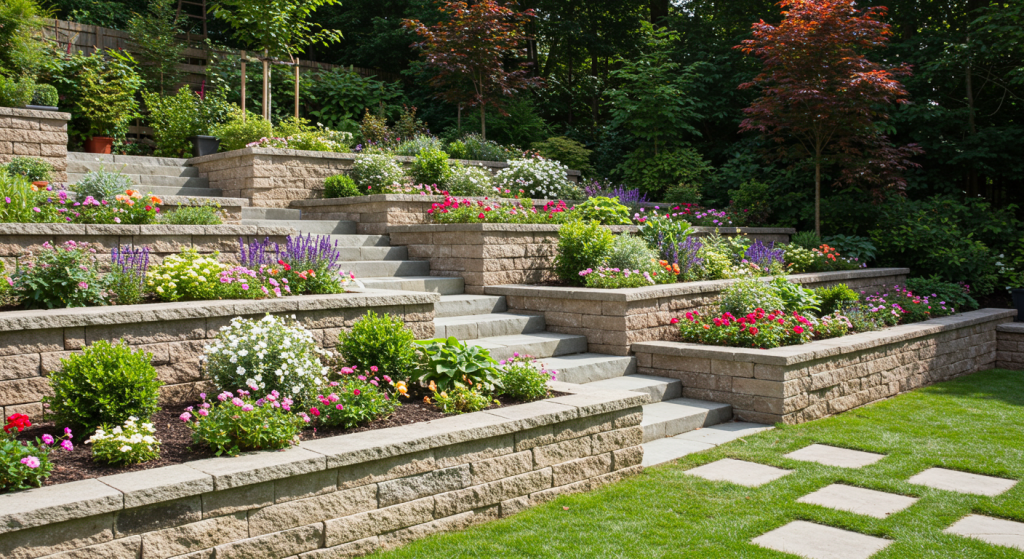
Designing a terraced garden is a popular way to utilize space more efficiently. These multi-level gardens not only look appealing but also allow for the cultivation of a variety of plants at different heights. Furthermore, the flat surfaces can be adorned with benches or decorative elements, creating inviting spaces for relaxation and gatherings.
Enhancing Aesthetic Appeal
Beyond their practical advantages, retaining walls serve as striking visual features in your garden design. With a plethora of material options available—ranging from timeless natural stone to contemporary concrete—homeowners can choose a style that resonates with their garden’s overall theme.
Each element of your garden should reflect your personal taste. Customizing a retaining wall allows for endless possibilities; you can opt for colors and textures that harmonize with existing landscapes, thereby enhancing the overall aesthetic. Furthermore, visual appeal isn’t limited to materials. Incorporating plants and greenery along these walls can cultivate a lively atmosphere, making your garden a true sanctuary.
Increasing Property Value
Investing in retaining walls is a decision that pays dividends in property value. Homes with well-designed outdoor features, including retaining walls, often attract prospective buyers. These installations not only boost curb appeal but also add functionality, making your property more desirable. Transforming your garden with retaining walls may also offer a strong return on investment when the time comes to sell.
Versatility and Functionality
The versatility of retaining walls is one of their defining characteristics. They can be personalized according to the specific needs of your garden. Whether you want to create a barrier for privacy, a support for planting, or simply a decorative feature, these walls fit the bill effortlessly.
Incorporate built-in seating to promote outdoor gatherings, or use the wall to house colorful planters, adding life to your garden. The options are virtually limitless. Using retaining walls as planters can help to maximize space, allowing you to enjoy lush greenery without sacrificing essential square footage.
Low Maintenance & Durability
Once properly installed, retaining walls require minimal upkeep. A well-constructed wall using durable materials can last for decades. Thus, choosing the right materials and design can save you future headaches and ensure that your landscape remains beautiful and functional.
The selection of materials plays a crucial role in the longevity and aesthetic of your retaining wall. For instance, natural stone exudes timeless elegance, while concrete offers modern appeal. The key is to choose materials that align with your garden design while ensuring structural integrity.
Retaining walls significantly enhance garden design by providing structural support and preventing soil erosion. Investing in a well-designed retaining wall by a professionnal can transform your garden into a functional and visually appealing space.